What to Bring on this Adventure? 3 Days Before Departure

Some essential arctic gear includes weatherproof socks, glove liners, waterproof gloves, a hiking pole, a face mask, ear muffs or a fleece hat, sunglasses, lip balm, and warm, waterproof boots, and, of course, a camera to capture the action. For this trip, I am using a Canon Powershot SX740HS. Our iPhone cameras will serve as backups.

Planning and packing are really difficult as you are advised not to over pack, yet you need clothing and equipment for a variety of conditions. Layering is definitely the key. Besides layers like “expedition stretch tops and bottoms,” we will need the right outer layer, footwear, hats, gloves, socks, etc., etc. Fortunately, Silversea Expeditions provides a complimentary hooded parka that has been custom-designed for polar travel. They also make available, for a fee, mid-calf boots for wet landings, and a water-resistant backpack. Everything will be delivered to our stateroom prior to us boarding on Thursday, December 5th.
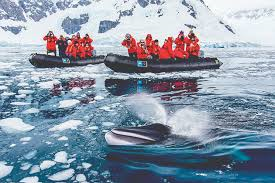
Adventures in the zodiacs will be an important part of this trip!

Landings onto Antarctica will either be “wet” or “dry” (sure!) so it will be important to be flexible with our packing. It is nice that Silversea will be providing the red parkas. We will be easy to see!
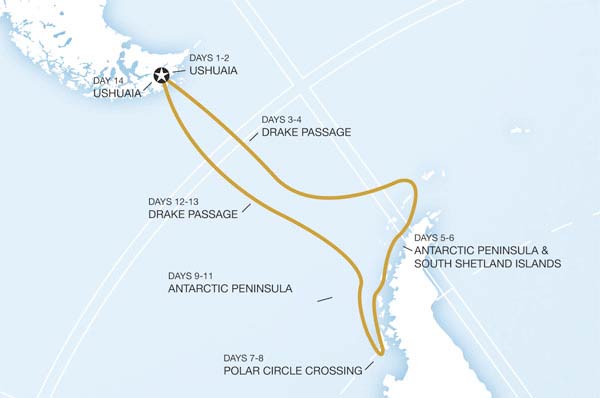
What About Crossing the Drake Passage?

“Crossing the Drake passage is the price of entry for going to the Antarctic. The peace and serenity of the Antarctic is matched by the turbulence and drama of the Drake. They are two sides of the same coin: you don’t get one without the other. The conditions of the Drake are somewhere between bad and terrifying, depending on the weather gods, But worth every moment.” –Lyndon File, G Adventures

Apparently, one of the most challenging aspects of getting to Antarctica is crossing the Drake Passage. The Drake Passage has been called “Drake Lake” and “Drake Shake. The Drake Passage extends into the Southern Ocean and is the confluence between the southwestern Atlantic Ocean and the Pacific Ocean which includes Cape Horn in South America and the South Shetland Islands. It is approximately 625 miles which should take us about two days to cross. Probably the more scary part about the trip is packing. What to bring?